
Site Hits: 36,622,766
Site Hits: 36,622,766










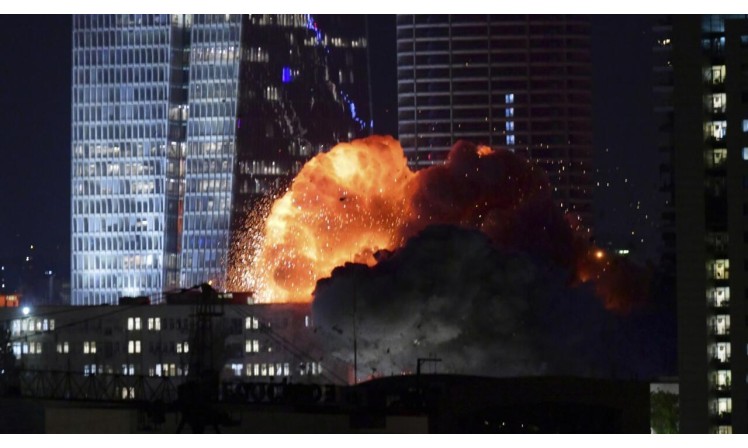
Image Source: Agencies
June 14, 2025: Israel was hit with retaliatory missile strikes by Iran late on Friday and into Saturday morning, injuring a number of people and killing at least two. Following a string of intense Israeli strikes that targeted Iran's military leadership and nuclear infrastructure, the attacks occurred. Israel’s offensive involved both warplanes and drones that had reportedly been smuggled into Iran in advance. These strikes targeted key facilities and resulted in the deaths of senior generals and scientists.
Israel defended the operation as an early intervention to prevent Iran from developing a nuclear weapon. However, both U.S. officials and independent experts had assessed that Iran was not actively pursuing such a weapon before the Israeli strikes. The escalation also disrupted ongoing nuclear talks between the United States and Iran, just days before the two sides were scheduled to meet on Sunday.
Iran responded by hitting Israeli cities with swarms of drones and ballistic missiles. Over Tel Aviv and Jerusalem, explosions lit up the night sky, shaking buildings and forcing already-tense civilians to seek refuge for several hours in shelters.
As tensions between the two countries have grown, Israeli Defense Minister Katz has issued a warning to Iran that "Tehran will burn" if it continues to fire missiles at Israel.
His comments came after Iran launched retaliatory strikes on Israel following Israel’s attack on Iran’s nuclear, missile and military complex.
During a situation assessment with Israel Defense Forces (IDF) chief of staff Eyal Zamir, Mossad director David Barnea, and other high-ranking military officials, Katz stated, "The Iranian dictator is turning his citizens into hostages and creating a reality in which they, especially the residents of Tehran, will pay a heavy price for the criminal attack on Israeli civilians." “If (Ali) Khamenei continues to fire missiles at the Israeli home front, Tehran will burn,” the Israeli defence minister asserted.
Israel has so far limited its attacks on Iranian nuclear and military facilities to key officials associated with them. Iran has fired some 200 ballistic missiles at Israel in several barrages since last night, the IDF said. It claimed that air defenses stopped most of the missiles. Around 25 per cent, less than 50, were not intercepted “according to protocol” allowing them to strike open areas without causing damage to any critical infrastructure.
A “small number” of missiles made it through air defences and caused casualties and damage, including in residential areas in Tel Aviv, Ramat Gan and Rishon Lezion in central Israel, the Army said.
The Iranian missile attacks are said to have wounded 70 people and killed three Israelis. According to the IDF, all of its bases—including air bases—were continuing to function normally with no disruptions. The Israeli Air Force and Navy shot down several drones that were launched overnight at Israel in addition to the 100 that were launched on Friday. Meanwhile, Zamir and Israeli Air Force chief, Tomer Bar, have said that “the way to Tehran has been paved”, stressing that the Israeli jets could now freely operate in the Iranian capital.
The Israeli army stated, "According to the plans, air force fighter jets will begin to carry out strikes on targets in Tehran."








Leave a comment: (Your email will not be published)