
Site Hits: 36,630,794
Site Hits: 36,630,794










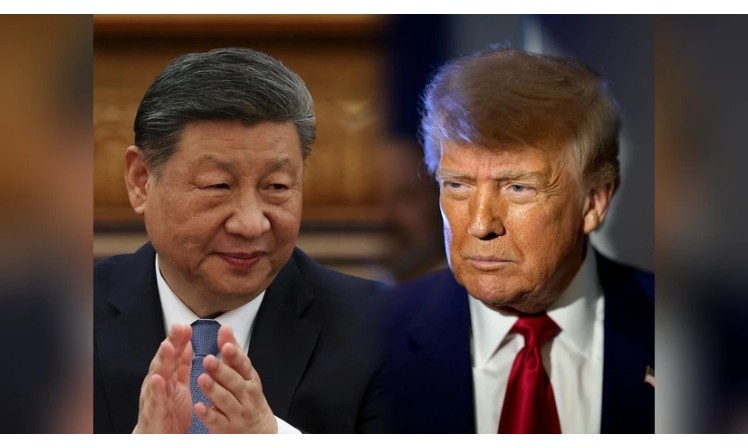
Image Source: Agencies
Aug 12, 2025: As US retailers prepare to increase inventory ahead of the crucial end-of-year holiday season, the United States and China extended their tariff truce for an additional 90 days, avoiding triple-digit duties on each other's goods. US President Donald Trump announced on his Truth Social platform that he had signed an executive order suspending the imposition of higher tariffs until 12:01 am EST (0501 GMT) on November 10, with all other elements of the truce to remain in place.
China's Commerce Ministry issued a parallel pause on extra tariffs early on Tuesday, also postponing for 90 days the addition of US firms it had targeted in April to trade and investment restriction lists.
Using the acronym for the People's Republic of China, Trump's executive order stated, "The United States continues to have discussions with the PRC to address the lack of trade reciprocity in our economic relationship and our resulting national and economic security concerns." "The PRC continues to take significant steps toward resolving non-reciprocal trade arrangements and addressing the concerns of the United States relating to economic and national security matters through these discussions," reads the statement. On Tuesday, at 12:01 a.m. EDT (0401 GMT), Beijing and Washington were to end their tariff truce. The extension until early November buys crucial time for the seasonal autumn surge of imports for the Christmas season, including electronics, apparel and toys at lower tariff rates.
The new order prevents the US from imposing tariffs on Chinese goods of up to 145 percent, whereas the Chinese were expected to impose tariffs on US goods of 125 percent, which would have led to a virtual trade embargo between the two countries. It maintains, at least for the time being, a tariff of 30% on Chinese imports and 10% on US imports from China. Trump said at a news conference earlier on Monday, "We'll see what happens," highlighting what he described as his favorable relationship with Chinese President Xi Jinping.
China claimed that the extension would stabilize the global economy and was "a measure to further implement the important consensus reached by the two heads of state during their June 5 call." Last week, Trump told CNBC that he would meet with Xi before the end of the year if a deal was reached and that the US and China were getting very close to a trade agreement. "It's positive news," said Wendy Cutler, a former senior US trade official who is now a vice president at the Asia Society Policy Institute.
"It demonstrated that both sides are trying to see if they can reach some kind of deal that would lay the groundwork for a Xi-Trump meeting this fall," according to "Combined with some of the de-escalatory steps both the United States and China have taken in recent weeks." The two sides in May announced a truce in their trade dispute after talks in Geneva, Switzerland, agreeing to a 90-day period to allow further talks. They met again in Stockholm, Sweden, in late July, and US negotiators returned to Washington with a recommendation that Trump extend the deadline.
The triple-digit import duties that both sides slapped on each other's goods in the spring were untenable, according to Treasury Secretary Scott Bessent, and had effectively imposed a trade embargo between the world's two largest economies. Kelly Ann Shaw, a senior White House trade official during Trump's first term who now works for the law firm Akin Gump Strauss Hauer & Feld, stated, "It wouldn’t be a Trump-style negotiation if it didn’t go right down to the wire." She stated that prior to agreeing to the extension, Trump probably pressed China for additional concessions.
On Sunday, despite the fact that analysts questioned the viability of any such agreement, Trump pressed for additional concessions, requesting that China quadruple its soybean purchases. On Monday, Trump did not reiterate the request. Shaw stated, "The whole reason for the 90-day pause in the first place was to lay the groundwork for broader negotiations." "Over the weekend, there was a lot of noise about everything from soybeans to export controls to excess capacity."
The news, according to Ryan Majerus, a former US trade official who now works for King & Spalding, will give both sides more time to resolve long-standing trade issues. He stated, "This will undoubtedly lower anxiety on both sides as talks continue and as the United States and China work toward a framework deal in the fall." According to data provided by the Commerce Department last week, China imports had surged at the beginning of the year in response to Trump's tariffs, but they fell dramatically in June. The US trade deficit with China tumbled by roughly a third in June to $9.5 billion, its narrowest since February 2004.
The US trade deficit with China has decreased by $22.2 billion in five consecutive months, or 70% from a year earlier. With Trump threatening to impose secondary tariffs on China, Washington has also been putting pressure on Beijing to stop buying oil from Russia to pressure Moscow over its war in Ukraine.







Leave a comment: (Your email will not be published)