
Site Hits: 36,626,932
Site Hits: 36,626,932


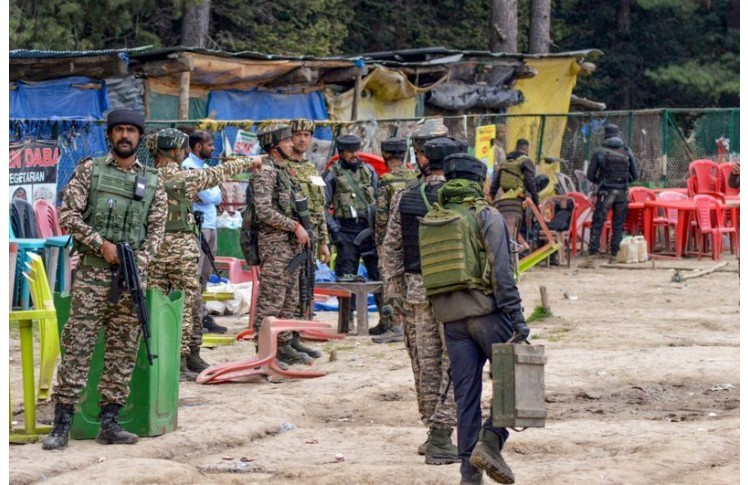
Aug 4, 2025: The source told The Tribune that despite the fact that no passports were found, "the Pakistan's National Database and Registration Authority (NADRA)-linked data and voter IDs leave little doubt of their nationality and official ties." The three Lashkar-e-Toiba (LeT) terrorists who had orchestrated the barbaric attack—Suleman Shah Faizal Jatt, Abu Hamza "Afghan," and Yasir "Jibran"—were neutralized by security forces on July 28, three months after the brutal massacre of 26 civilians, most of whom were Hindu tourists, in Pahalgam, which is located in Jammu and Kashmir. All three terrorists were Pakistani citizens, as proven by forensic and intelligence evidence, and no local Kashmiri militants were involved in the shooting. However, Parvaiz and Bashir Ahmad Jothar, two locals, had provided them with overnight lodging. The encounter, codenamed Operation Mahadev, took place in the Dachigam-Harwan belt, where the trio had been hiding since the killings in Baisaran meadow on April 22. "All three had infiltrated into India in 2022 through the Gurez sector and had been operating covertly under Lashkar’s direct command from Pakistan," an officer said.
Suleman Shah and Abu Hamza's bodies contained two laminated voter ID slips with serial numbers linked to the electoral rolls in Lahore and Gujranwala. These slips were issued by the Election Commission of Pakistan. A salvaged microSD card from a damaged satellite phone that contained biometric data from Pakistan's NADRA was even more damning. The officer stated, "The database confirmed that all three men are Pakistani citizens and listed family addresses in Changa Manga (Kasur) and Koiyan village near Rawalakot in Pakistan-occupied Kashmir." In addition, the rucksack used to store spare ammunition contained candy wrappers from Karachi-made brands CandyLand and ChocoMax. The lot numbers on the wrappers were traced to a May 2024 consignment delivered to Muzaffarabad, adding another layer of physical evidence pointing to their Pakistani origin.
Three AK-103 rifles were among the weapons recovered in the July operation. The rifles and the shell casings recovered from the Baisaran site match 100% in striation, according to ballistics tests. "A shirt that had been ripped at the Baisaran attack site had a blood stain on it. The officer stated, "Mitochondrial profiles were extracted from the blood stain, and they were identical to the DNA of the three bodies recovered in Dachigam." It is interesting to note that between April 22 and July 25, a Huawei satellite phone used by the terrorists remained operational and was observed pinging the Inmarsat-4 F1 satellite network nearly every night. Triangulation of the signal helped the security forces narrow down the search grid to a 4-square-km section of Harwan forest, ultimately leading to the July 28 encounter.
The officer also clarified the initial confusion over the attackers’ identities, after the Jammu and Kashmir Police released sketches of suspected terrorists Hashim Musa, Talha and Adil Hussain Thoker on April 24. "The sketches were based on an unrelated photograph recovered from a December 2024 shootout. "After Operation Mahadev, the actual perpetrators were correctly identified," he stated. Sajid Saifullah Jatt, Lashkar's south Kashmir operations head and a resident of Changa Manga near Lahore, was matched by voice samples extracted from the recovered sat-phone, thereby strengthening the connection between the attack and Lashkar's command structure in Pakistan. On July 29, Rizwan Anees, a senior LeT commander from Rawalakot, was captured on camera holding funeral prayers for the attackers who had been killed. He stated, "The footage has been added to India's evidence dossier, shot by local residents."





Leave a comment: (Your email will not be published)