
Site Hits: 36,630,897
Site Hits: 36,630,897










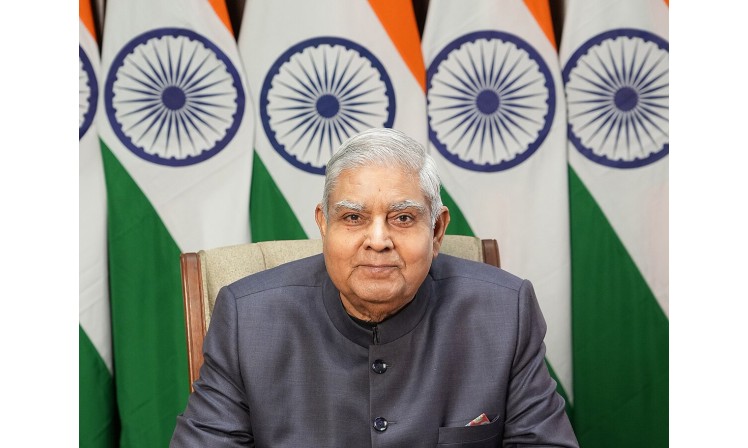
Image Source: Agencies
July 22, 2025: Due to Jagdeep Dhankhar's resignation as Vice President, an election to select his replacement must be held "as soon as possible." In accordance with Clause 2 of Article 68 of the Constitution, an election will be held "as soon as possible" to fill a vacancy in the position of Vice President caused by his death, resignation, removal, or other cause. “for the full term of five years from the date on which he enters upon his office” will be the term of office granted to the candidate elected to fill the vacancy. If the Vice-President dies or resigns before the end of his term, or if the Vice-President acts as India's President, no one is named in the Constitution to take over. The country's vice president is the country's second highest constitutional office. He serves for a five-year term, but can continue to be in office, irrespective of the expiry of the term, until the successor assumes office.
The only provision in the Constitution pertains to the Vice-President's role as chairperson of the Rajya Sabha, which is filled by the deputy chairperson or any other Rajya Sabha member authorized by the President of India during the vacancy. By submitting his resignation to the President, the Vice President is free to step down from his position. When the resignation is accepted, it takes effect immediately. The Vice-President of the Rajya Sabha is the ex-officio chairperson of the Rajya Sabha and does not hold any other profit-making office. This means that because they are the Vice-President, they hold the position of chairperson of the Rajya Sabha. The Vice-President is not entitled to any salary or allowances that are due to the chairperson of the Upper House during any time that he acts as the President or performs President-related duties. According to Article 66 of the Constitution, the Vice-President is elected by the members of the Electoral College consisting of the members of both Houses of Parliament in accordance with the system of proportional representation by means of the single transferable vote.
A person who is not a citizen of India, has reached the age of 35, and is eligible for election as a member of the Rajya Sabha cannot be elected as Vice-President. If a person holds a profit-making position within the Indian government, a state government, or a subordinate local authority, he is ineligible.








Leave a comment: (Your email will not be published)